
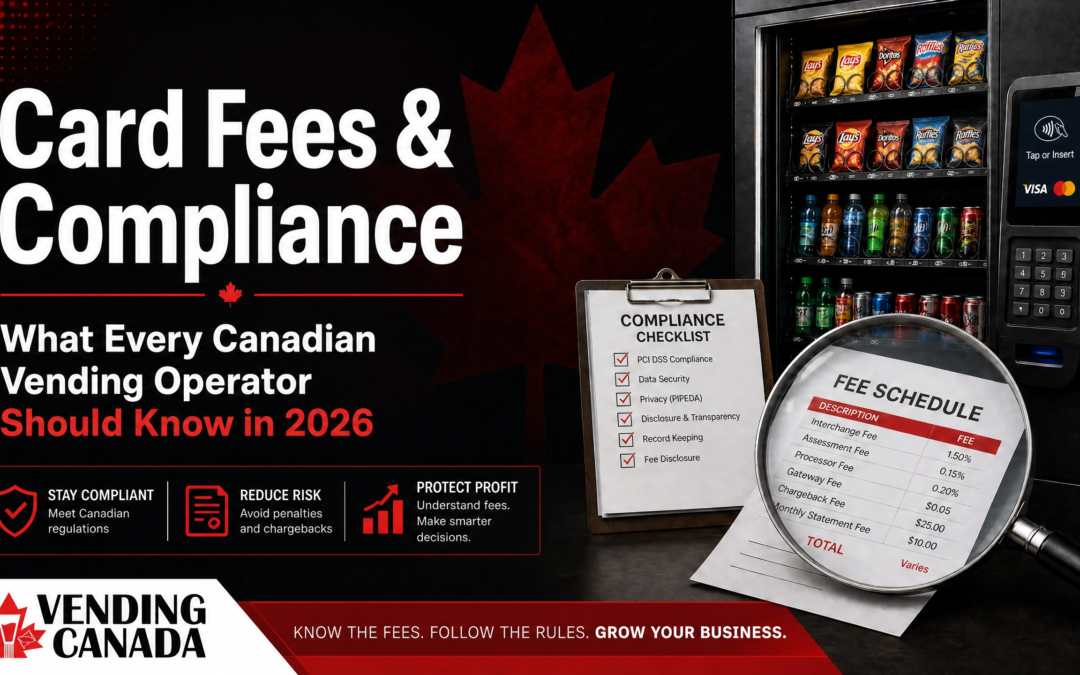
Interchange Fees Fell in 2024, but Not Every Processor Passed Along the Savings
Every card transaction made through a vending machine includes an interchange fee. This fee is paid by the operator’s payment processor or acquirer to the customer’s card-issuing bank and is ultimately reflected in the operator’s overall payment processing costs.
In October 2024, the federal government finalized agreements with Visa and Mastercard that reduced the average small-business credit card interchange rate to approximately 0.95%, down from an average closer to 1.4%. The government estimated that eligible small businesses would save about $1 billion over five years. It also updated the Code of Conduct for the Payment Card Industry in Canada, requiring payment processors to clearly disclose when network fee reductions are not being passed on to merchants.
The savings, however, are not automatic for every business. Operators are not billed for interchange fees directly; these are fees handled by payment processing companies [3]. Processors using interchange-plus pricing typically pass on the exact interchange fee plus a markup, generally allowing operators to benefit from lower rates. However, those using flat-rate or tiered pricing plans may not fully benefit because processors are not always required to pass those savings through. The Canadian Federation of Independent Business has publicly criticized some processors for failing to do so.
If your vending machines are billed using a flat percentage per transaction, it is worth asking your payment provider whether your effective rate reflects the 2024 reductions or requesting a review of your processing statements.
Practical takeaway: If your machines generate significant card sales, compare your effective processing rate, calculated as total fees divided by total card sales, against the 0.95% benchmark. Even a difference of 20 to 30 basis points can have a noticeable impact across a larger vending route. Payment solution providers like MONEXgroup, which offers integrated processing solutions and emphasizes financial transparency, can help businesses understand and optimize their transaction fees.
The Bottom Line
Cashless payments and multi-location operations have made the Canadian vending industry more efficient, but they have also introduced additional financial and regulatory responsibilities.
Operators who periodically review their payment processing costs against current interchange rates, verify that they are receiving applicable fee reductions, and keep licensing and permit renewals organized are better positioned to protect already-thin operating margins.
Note: Licensing requirements are established locally. Operators should confirm current requirements directly with their municipal licensing office and provincial health authority, as this article summarizes general practices rather than the rules of any specific jurisdiction.